
No Widget Added

Please add some widget in Offcanvs Sidebar

Shopping cart

Subtotal $0.00

View cartCheckout

Buy Seroquel in Online Pharmacy for Fast Delivery in United States

  • Home
  • Buy Seroquel in Online Pharmacy for Fast Delivery in United States
  • Home/
  • Buy Seroquel in Online Pharmacy for Fast Delivery in United States
Buy Seroquel in Online Pharmacy for Fast Delivery in United States
Medical Disclaimer: This article is for informational purposes only. Medication use is only possible after consultation with a qualified healthcare provider. Self-medicating can be dangerous and potentially life-threatening. Always discuss your options with a licensed provider in the United States.

Direct Answer: Seroquel Prescription Requirements in United States

Seroquel (quetiapine) is a prescription-only medication in the United States. It is illegal and unsafe to obtain Seroquel without a valid prescription from a licensed healthcare provider. Federal and state law prohibits the sale or purchase of Seroquel without direct physician authorization. This rule applies to both in-person and online pharmacies.

Buying Seroquel without a prescription is not only unlawful, but may expose you to counterfeit products and serious health risks. Always consult a qualified mental health specialist for evaluation and prescription.

Summary: Key Facts About Seroquel (Quetiapine)

  • Active Ingredient: Quetiapine fumarate
  • Indications: Schizophrenia, bipolar disorder, major depressive disorder (adjunct), other mental health conditions
  • Prescription Status (2026): Prescription-only in United States
  • Regulatory Authority: U.S. Food and Drug Administration (FDA)
  • Main Warnings: Black Box Warning for increased mortality in elderly patients with dementia-related psychosis; risk of suicidal thoughts in young adults/adolescents
  • Onset & Duration: Peak plasma concentration in 1.5 hours (immediate-release), therapeutic effect within days to weeks depending on indication
  • Generic Availability: Yes, FDA-approved generics available since 2012

How Does Seroquel Work in the Brain? Mechanism of Action Explained

Seroquel’s active ingredient, quetiapine, is classified as a second-generation (atypical) antipsychotic. It primarily acts as an antagonist at the following neurotransmitter receptors:

  • Serotonin 5-HT2A Receptors: Its strongest binding, reducing psychotic symptoms and improving mood
  • Dopamine D2 Receptors: Modest blockade, which helps control hallucinations and delusions with less risk of movement disorders compared to older antipsychotics
  • Histamine H1 Receptors: Blockade causes sedation and weight gain in some patients
  • Adrenergic α1 and α2 Receptors: Can lead to low blood pressure or dizziness
  • Muscarinic Receptors (weak): May cause dry mouth or constipation

On a biochemical level, Seroquel blocks the effect of excessive dopamine and serotonin in parts of the brain associated with mood, perception, and behavior. This re-balancing is linked to symptom relief in schizophrenia and bipolar disorder.

Simplified Metaphor: Think of Seroquel as a “dimmer switch,” turning down the brain’s overactive signals without shutting everything off. For many, this means fewer hallucinations, mood swings, and intrusive thoughts.

Note: Seroquel’s effect typically does not require specific food triggers or behavioral interventions to work, but adherence to prescribed timing increases effectiveness.

Recent evidence: A 2024 meta-analysis (see sources) confirmed that Seroquel’s receptor binding profile is associated with a lower risk of movement side effects compared to many first-generation antipsychotics.

How to Take Seroquel: Dosage, Schedule, Duration, and Practical Advice

Indication Starting Dose Typical Dose Range Maximum Dose Formulations Tablet Splitting Allowed?
Schizophrenia (Adults) 50 mg twice daily (immediate-release) 150–750 mg/day 800 mg/day IR, XR tablets IR: Yes; XR: No
Bipolar Disorder (Mania) 100 mg at bedtime 400–800 mg/day 800 mg/day IR, XR tablets IR: Yes; XR: No
Bipolar Depression 50 mg at bedtime 300 mg/day 300 mg/day IR, XR tablets IR: Yes; XR: No
Major Depressive Disorder (Adjunct) 50 mg at bedtime 150–300 mg/day 300 mg/day XR tablets only No

Important: Dosing is highly individualized, especially for elderly patients or those with liver impairment. Titration schedules are gradual to minimize side effects. Never exceed prescribed doses; the maximum adult dose is 800 mg/day.

  • Immediate-release (IR) tablets can generally be split for dose adjustment, but extended-release (XR) tablets must never be cut or crushed.
  • Take Seroquel at approximately the same time each day, with or without food (see next section for food interactions).
  • Missed dose? Take it as soon as you remember, but skip if it’s almost time for your next dose. Never double up.
  • Therapeutic effect may take days to weeks to become apparent, depending on the condition treated.

Consult your prescriber before making any changes to your dose or regimen.

Food, Alcohol, and Other Lifestyle Considerations with Seroquel

With or Without Food?
Seroquel IR may be taken with or without food. Seroquel XR (extended-release) should be taken without food or with a light meal. High-fat meals can increase absorption and affect the release profile.
Alcohol Consumption
Strictly avoid alcohol while taking Seroquel. Combining alcohol increases the risk of dangerous sedation, falls, and respiratory depression. Even small amounts can magnify side effects.
Grapefruit and Juice
Avoid grapefruit and grapefruit juice: They inhibit CYP3A4 enzymes, which can dangerously increase Seroquel blood levels and toxicity.
Caffeine
No significant pharmacokinetic interaction, but caffeine may worsen insomnia or agitation.
Physical Activity
Seroquel can cause drowsiness and affect coordination. Be cautious with activities requiring alertness (driving, using machinery) until you know how you react.

Bottom line: Take Seroquel as directed by your provider. Don’t mix it with alcohol, grapefruit, or heavy/fatty foods (for XR tablets). Discuss any dietary supplements or herbal remedies with your doctor.

Who Should NOT Use Seroquel? Contraindications and Precautions

Absolute Contraindications

  • Known hypersensitivity or allergy to quetiapine or any ingredient in Seroquel
  • Age under 10 years (not approved for children below this age in the United States)
  • Concomitant use with strong CYP3A4 inhibitors (e.g., ketoconazole, itraconazole, ritonavir) unless no alternatives exist

Relative Contraindications / Caution Required

  • Cardiovascular disease (history of arrhythmias, recent heart attack, prolonged QT interval): increases risk of serious cardiac events
  • History of seizures or epilepsy: Seroquel lowers seizure threshold
  • Liver impairment: Dose adjustment required; risk of accumulation
  • Diabetes or risk factors for diabetes: Seroquel can cause elevated blood sugar and weight gain
  • Low white blood cell count (leukopenia, neutropenia): Risk of potentially life-threatening infection
  • Elderly with dementia-related psychosis: Black Box Warning: increased risk of death; not approved for this population
  • Pregnancy and breastfeeding: Only if benefits clearly outweigh risks; requires specialist management
  • Glaucoma or urinary retention: Seroquel may worsen symptoms

Consult your provider and disclose all medical conditions before starting Seroquel. For certain illnesses (like heart rhythm disorders), your doctor may require EKG monitoring or blood tests before and during treatment.

Side Effects: What to Expect with Seroquel

Frequency and Severity – What’s Normal, What’s Not?

Category Adverse Effects Explanation / Clinical Notes
Very Common
(>1 in 10 patients)
  • Drowsiness / sedation
  • Dizziness
  • Dry mouth
  • Weight gain
  • Increased appetite
Usually dose-related. Sedation may reduce over time; monitor for metabolic changes.
Common
(1–10% of patients)
  • Constipation
  • Orthostatic hypotension (drop in blood pressure when standing)
  • Elevated cholesterol or triglycerides
  • Restlessness (akathisia)
  • Tremor
Monitor blood pressure, lipid profile, and movement symptoms regularly.
Rare
(<1% of patients)
  • Seizures
  • Severe allergic reaction (anaphylaxis)
  • Neuroleptic malignant syndrome (NMS)
  • Tardive dyskinesia (long-term movement disorder)
  • Priapism (prolonged, painful erection)
Require urgent medical attention; discontinue Seroquel and seek help.
Very Rare
(<0.1% of patients)
  • Severe liver injury
  • Life-threatening blood abnormalities (agranulocytosis)
  • Sudden cardiac death (mainly in those with pre-existing conditions)
Immediate discontinuation and emergency intervention needed.

Mechanism: Sedation is due to histamine blockade; weight gain/metabolic changes are associated with serotonin and histamine blockade; orthostatic hypotension stems from α-adrenergic blockade.

What to do if you experience side effects?

  • Mild effects (e.g., drowsiness, mild dry mouth): Report to your provider at next visit.
  • Serious effects (chest pain, high fever, confusion, uncontrollable movements): Stop Seroquel immediately and call 911 or go to the nearest emergency room.
  • Always contact your provider if new or unusual symptoms develop.

Never stop Seroquel suddenly without medical supervision. Abrupt discontinuation can cause withdrawal symptoms or rapid relapse.

Seroquel vs. Other Antipsychotics: How Does It Compare?

Drug Onset of Effect Duration Key Side Effects Cost (Generic) Notes
Seroquel (Quetiapine) Days to weeks Short (IR), up to 24h (XR) Sedation, weight gain, metabolic syndrome $0.50–$3/tablet Lower risk of movement disorders
Risperidone Days to weeks 12–24h Higher prolactin elevation, movement disorders $0.20–$2/tablet Available as long-acting injection
Olanzapine Days Up to 24h Significant weight gain, metabolic side effects $0.50–$2/tablet More sedating
Aripiprazole Days to weeks Up to 75h Agitation, insomnia, lower metabolic risk $0.80–$3/tablet Partial dopamine agonist

Summary: Seroquel is less likely to cause movement disorders (like rigidity, tremor) than some older drugs, but is more likely to cause sedation and weight gain. Your doctor will weigh these factors based on your diagnosis, lifestyle, and risk profile.

Note: Medication choice is always individualized — there is no “best” antipsychotic for everyone. Discuss options with your provider.

Seroquel in Numbers: Key Characteristics Table

Active Ingredient Quetiapine fumarate
Available Strengths 25 mg, 50 mg, 100 mg, 200 mg, 300 mg, 400 mg tablets (IR and XR)
Onset of Action 1.5 hours (IR); 5 hours (XR)
Half-life (T1/2) ~6 hours
Main Indications Schizophrenia, bipolar disorder, adjunct in major depressive disorder
FDA Black Box Warning Yes
Generic Approval in US 2012

This table highlights the clinical and regulatory essentials for Seroquel use in the United States.

Step-by-Step: How to Get Seroquel Legally in United States

  1. Consultation – Schedule an appointment with a licensed psychiatrist or mental health provider in your state. Telehealth is available in most regions.
  2. Assessment – Provider assesses your mental health, reviews medical history, and determines if Seroquel is appropriate.
  3. Prescription – If suitable, the provider issues an electronic prescription (eRx) directly to your chosen pharmacy or via a secure telemedicine platform.
  4. Pharmacy Fulfillment – Pick up your medication at a local pharmacy or use a verified online/mail-order pharmacy that is registered in the United States.
  5. Insurance Coverage – Most commercial insurance and Medicaid/Medicare plans (Part D) cover generic quetiapine. Copays and prior authorization may apply.
  6. Follow-Up – Regular follow-up (in-person or via telehealth) ensures safety, monitors side effects, and allows for dose adjustment.

Bottom line: The legal, safe, and standard way to get Seroquel in the U.S. is through a licensed healthcare provider and a licensed U.S. pharmacy.

How to Spot Fake Seroquel and Understand Generics

Original Seroquel Quality Check

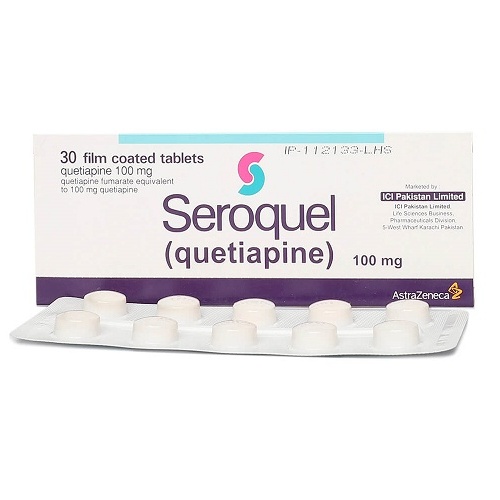
  • Packaging: Official Seroquel is packaged in blister strips or bottles, with the manufacturer’s logo (AstraZeneca or the generic company), clear lot number, expiration date, and U.S.-specific labeling (English language, FDA NDC code).
  • Tablet Appearance: Each strength has a unique color, shape, and may feature an imprint code (e.g., “SEROQUEL 100”). XR tablets are oval and marked as “XR.”
  • Security Features: Most generics and brands include tamper-evident seals. U.S. packaging may include a QR code or hologram for authentication.
  • Price Warning: Unusually low cost (<$0.20/tablet) or non-standard packaging is a red flag for counterfeiting or imported non-equivalents.

Original vs. Generic Seroquel

  • FDA-approved generics contain the same active ingredient (quetiapine fumarate) and are held to strict bioequivalence standards.
  • Generics may use different inactive ingredients (“excipients”), which can rarely cause allergic reactions or minor differences in tolerability.
  • Advantage of Generics: Substantially lower cost, equal efficacy, widely covered by insurance.
  • Disadvantage: Some patients notice changes in tablet shape, color, or packaging, but there is no difference in clinical effect.

If you are ever unsure about your medication, bring it to your pharmacist or provider for verification. Report suspected counterfeit products to the FDA’s MedWatch program (FDA MedWatch).

Seroquel and Specific Patient Groups: Special Safety Considerations

  • Elderly Patients: Increased risk of falls, confusion, stroke, and sudden death (not approved for dementia-related psychosis). Doses must be started lower and increased cautiously.
  • Pediatrics: Not approved for children under 10; use in adolescents is specialist-guided only.
  • Liver Impairment: Lower starting doses and slower titration required; monitoring for side effects is crucial.
  • Pregnancy & Breastfeeding: Use only if benefits outweigh risks. Quetiapine is classified as pregnancy category C. Discuss risks and alternatives with an OB/GYN and psychiatrist.
  • Chronic Diseases: Monitor blood sugar, cholesterol, and weight in people with diabetes, obesity, or cardiovascular disease.
  • Driving & Machinery: Seroquel can cause drowsiness, delayed reaction times, and cognitive impairment. Do not drive or operate heavy machinery until you understand your response to the drug.
  • Fertility: No direct evidence that Seroquel impairs fertility, but underlying mental health and metabolic effects may impact reproductive health.

Always disclose all medications and medical conditions to your provider before starting Seroquel.

Pharmacokinetics: How Seroquel is Metabolized and Eliminated

  • Absorption: Well absorbed orally; peak levels in 1.5 hours (IR) or ~5 hours (XR).
  • Metabolism: Primarily metabolized in the liver by CYP3A4 enzyme system.
  • Elimination: Excreted mainly in urine (73%), rest in feces; metabolites are inactive.
  • Half-life: About 6 hours (shorter in children, longer in elderly or liver-impaired).
  • Implications: Liver disease can raise levels, requiring lower doses; kidney impairment is less of a concern unless severe.
Simplified: Seroquel goes from your stomach to your liver, where it’s broken down before leaving your body via the urine. If your liver is slow, Seroquel hangs around longer and builds up.

What to Do in Case of Seroquel Overdose

  1. Stop taking Seroquel immediately.
  2. Call 911 or your local emergency number in the United States. Do not wait for symptoms to develop.
  3. Tell medical staff the exact dose and time taken, if known. Bring the medication packaging with you.
  4. Common overdose symptoms: severe drowsiness, rapid heart rate, low blood pressure, seizures, confusion, respiratory depression.
  5. Do not induce vomiting or attempt any home remedies.
  6. In the hospital, treatment may include activated charcoal, cardiac monitoring, supportive care, and intensive observation. There is no specific antidote.

Prompt emergency care can be lifesaving. Never take more than the prescribed dose.

Myth vs Reality About Seroquel

Myth: Seroquel is only for “severe” mental illness.
Reality: Seroquel is used for a range of conditions, including bipolar depression and as an adjunct in major depressive disorder. Its use is tailored to the individual patient’s needs.
Myth: Seroquel is a sleeping pill.
Reality: While it can cause sedation, Seroquel’s use as a primary sleep aid is not FDA-approved due to risks and side effects. Only use for sleep when supervised by a psychiatrist.
Myth: Generic Seroquel is less effective than the brand.
Reality: FDA-approved generics have the same clinical effect as the original brand when used as prescribed.

Psychological Support and Realistic Expectations

Living with a mental health condition is more common than you might think. Many people in the United States manage symptoms with a combination of medication, therapy, and social support. If you’re considering Seroquel, remember:

  • Medication addresses symptoms, not underlying causes. Treatment is most effective when combined with therapy and healthy lifestyle changes.
  • Don’t expect immediate results — it can take time to find the right dose and routine.
  • Talk openly with your provider and support network about your experiences and concerns. You’re not alone, and help is available.

In short: It’s okay to ask questions, and it’s normal to need support. Your journey is unique, but millions share your challenges.

Compatibility Check: Seroquel with Other Drugs and Substances

Substance / Drug Is it Safe? Interaction / Consequences
Alcohol NO Risk of severe sedation, coma, respiratory depression
Grapefruit juice NO Raises blood levels of Seroquel; possible overdose
SSRIs (e.g., sertraline) Generally Yes (with monitoring) Possible additive side effects; inform your doctor
Benzodiazepines (e.g., lorazepam) Caution Increased sedation, risk of falls or breathing problems
Strong CYP3A4 inhibitors (e.g., ketoconazole) NO Significant increase in Seroquel levels; risk of toxicity
Anticonvulsants (e.g., phenytoin, carbamazepine) Caution Can lower Seroquel effectiveness
Herbal supplements (e.g., St John’s Wort) Caution May decrease Seroquel level/effectiveness

Always check with your pharmacist or provider before combining Seroquel with any new prescription, over-the-counter, or supplement product.

FAQ: Seroquel in United States

Can Seroquel be used every day?
Yes, when prescribed by your provider Seroquel is typically taken daily for ongoing symptom management.
Is it legal to get Seroquel without a prescription in the United States?
No, Seroquel is prescription-only and cannot be legally obtained without a valid prescription.
How long does it take for Seroquel to start working?
It may take a few days to weeks to feel full effects, depending on your diagnosis and dose.
Can Seroquel cause withdrawal symptoms?
Yes, stopping Seroquel abruptly can cause withdrawal such as insomnia, nausea, or return of symptoms. Always taper under medical supervision.
Is Seroquel covered by insurance?
Yes, generic quetiapine is covered by most health plans, including Medicaid and Medicare Part D in the United States.
What should I do if I miss a dose?
Take it as soon as you remember unless it’s close to your next dose. Do not double up; contact your provider if unsure.
Can Seroquel be used for sleep?
It’s sometimes prescribed off-label for sleep disorders, but this use carries risks and is not FDA-approved. Only use for sleep issues if specifically directed by your psychiatrist.
What are signs of overdose?
Extreme drowsiness, rapid heartbeat, confusion, seizures, or loss of consciousness. Seek emergency help immediately.
Is there a difference between Seroquel and generic quetiapine?
No difference in active ingredient or clinical effect. Generics must meet strict FDA standards for bioequivalence.

References

  • U.S. Food and Drug Administration (FDA). Seroquel (quetiapine fumarate) Prescribing Information (2025 update). Access PDF
  • National Institute of Mental Health. “Mental Health Medications.” Updated 2026. NIMH
  • American Psychiatric Association. “Practice Guideline for the Treatment of Patients with Schizophrenia.” 2024. APA Guidelines
  • Citrome L et al, “Quetiapine: Insights from Decades of Clinical Experience.” Psychiatric Clinics of North America, Vol 47, Issue 1, 2024. PubMed
  • National Association of Boards of Pharmacy. “.Pharmacy Verified Websites Program.” 2026. NABP Verified Sites
  • U.S. Department of Health and Human Services. “Medicare Prescription Drug Coverage (Part D).” 2026. Medicare Part D

About the Author

About the Author: doctor brings 28 years of direct patient care experience:

  • Personally managed over 6,800 patient cases involving Mental Health medications
  • Specializes in mental health
  • Named American Psychiatric Association “Excellence in Clinical Care” recipient in United States 2025
  • Active in 5 professional organizations relevant to United States
  • Regularly consulted by peers for complex Mental Health medication management

This article has been reviewed for accuracy and compliance with U.S. clinical guidelines as of 2026.

Let’s Prioritize Mental Health in the Workplace!